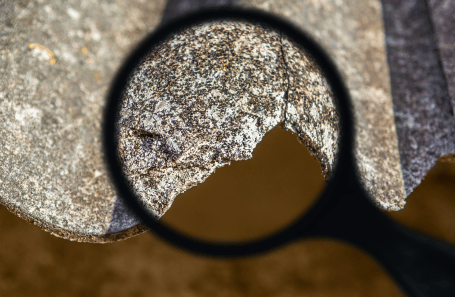
Chrysotile Asbestos
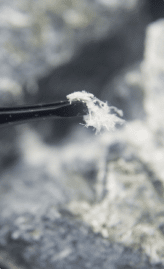
Also known as white asbestos, chrysotile asbestos is the primary form of asbestos used commercially, accounting for approximately 95 percent of all commercial and industrial use and, thus, the most commonly encountered in cases of asbestos exposure. Chrysotile is the sole form of asbestos in the serpentine group of minerals.
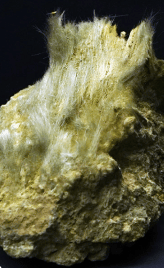
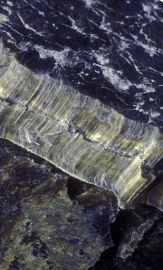
According to Micro Analytical Laboratories, chrysotile asbestos is comparable to fine threads or hairs that are curved, wavy, or kinked. Occasionally, chrysotile fibers are straight. The fibers are usually long and very flexible. Shorter chrysotile fibers tend to be thicker and more brittle.
The most useful characteristics of chrysotile asbestos are its tensile strength, resistance to extreme temperatures, chemical resistance, and flexibility of the fibers. It is also so stain-resistant that it was often used in the construction of stain-resistant laboratory bench tops. Its flexibility is useful in textiles due to the ease of spinning the ultra-flexible fibers.
Products
Commercial products that use chrysotile asbestos include the following, according to the Federal Register and Penn Medicine:
- Diaphragms in the chlor-alkali industry
- Sheet gaskets in chemical production
- Brake blocks
- Brakes and linings
- Asphalt
- Vehicle friction parts, such as brake pads and clutches
- Gaskets
- Plastics
- Roofing materials
- Rubber textiles
Crocidolite Asbestos
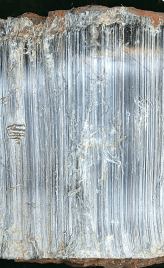
Crocidolite is the asbestos mineral, or asbestiform, of the group of minerals known as riebeckite. Crocidolite is also known as blue asbestos and ranges in color from Prussian blue to indigo and may appear as yellow-green. It is also occasionally dark blue or black, according to NIOSH.
Crocidolite asbestos may appear as different colors from different viewing angles, a quality known as pleochroism. It is slightly more brittle than chrysotile but, according to NIOSH, is still flexible enough to be useful for spinning and weaving.
Crocidolite is in the amphibole family. It is harder than the other amphibole varieties, and the fibers may be curved or straight. Like other asbestiforms in this family, crocidolite is sharp and needle-like.
Products
According to Penn Medicine, crocidolite was commonly used in the following products:
- Cement
- Tiles
Insulation materials
A study by Cancer Research also found that crocidolite asbestos was used in the filters of the original Kent Micronite brand of cigarettes from 1952 to 1956, exposing smokers of this brand to substantial amounts of asbestos.
Amosite Asbestos
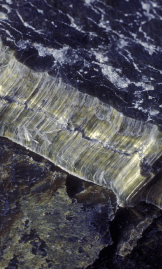
Amosite is the commercial name for grunerite, an amphibole-family form of asbestos that occurs in the cummingtonite-grunerite series of minerals.
This type of asbestos is often referred to as brown asbestos, but it can range in color from weak green to brown, changing in color range from yellow to reddish brown when heated at high temperatures for a long period of time.
This form of asbestos consists of very long, thin fibers and fiber bundles that are moderately brittle and often arched. It often forms bundles that resemble broom tails and is prone to separating into small groups of fibers that are needle-like. Rather than fraying at the ends, the ends are typically flat or knifelike.
Products
According to Penn Medicine, amosite is typically used in products such as the following:
- Cement
- Chemical and electrical insulation
- Fire protection
- Gaskets
- Insulation boards
- Plumbing insulation
- Roofing
- Thermal insulation
- Tiles
Actinolite Asbestos
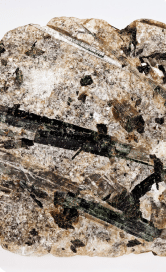
A member of the amphibole group, actinolite is dark-colored, ranging from bright to grayish green, and has needle-like fibers. It is found in the mineral series tremolite-ferro-actinolite.
Products
According to Penn Medicine, actinolite has been used in the following products:
- Cement
- Insulation
- Paints
- Sealants
- Drywall
Tremolite Asbestos
Tremolite is in the amphibole family. The difference between tremolite and actinolite is the magnesium and iron levels, according to Micro Analytical Laboratories.
Tremolite has higher magnesium content and appears white, pink, or pale violet.
According to NIOSH, tremolite can appear as an asbestiform and non-asbestiform variety. The asbestiform variety of tremolite is also known as byssolite. Tremolite occurs in the tremolite-ferro-actinolite family of minerals, often in metamorphic rocks such as dolomitic limestone and talc deposits.
Products
According to Penn Medicine, tremolite asbestos has been found in the following products:
- A contaminant of talc and vermiculite
- Paint
- Sealants
- Insulation
- Roofing
- Plumbing materials
Anthophyllite Asbestos
Anthophyllite asbestos is an amphibole asbestiform.
This type of asbestos is rarely used in building materials. Its shape resembles a knife blade that comes to a point at one end. The fibers are long, needle-like, and flat. It is mined in Finland, Canada, and parts of the United States.
Products
According to Penn Medicine, anthophyllite asbestos has been used in the following building products:
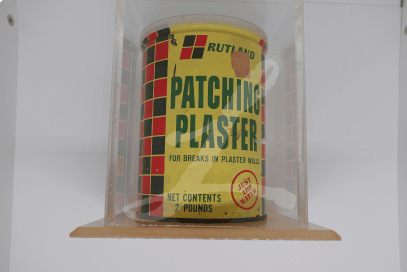
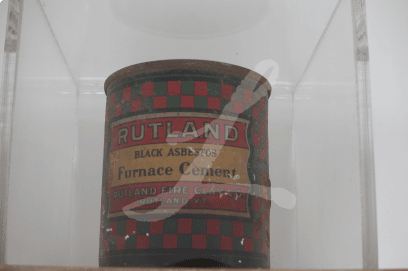
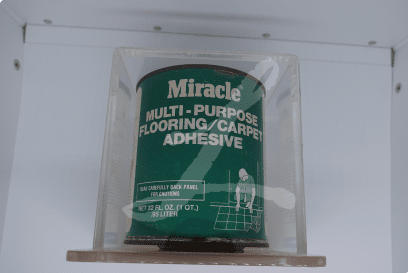
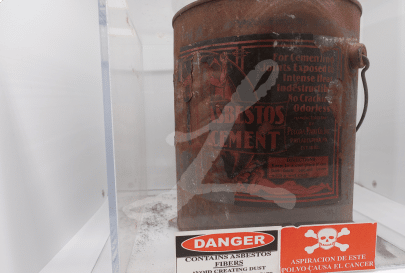
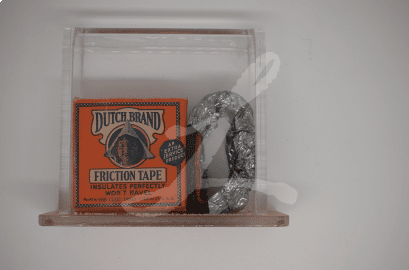
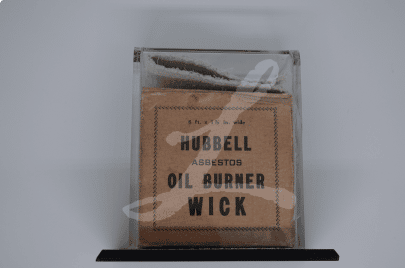
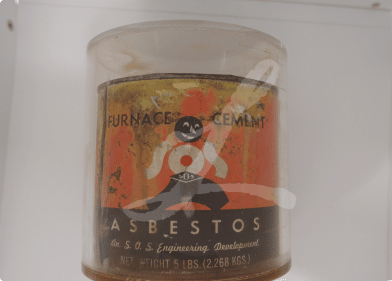
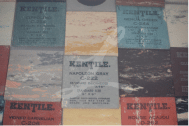
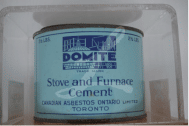
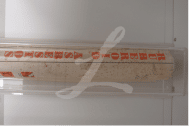
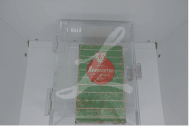
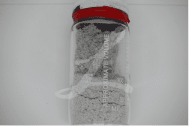
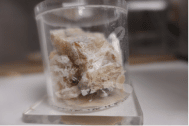
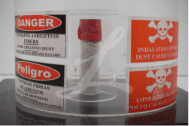
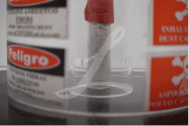
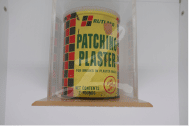
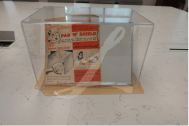
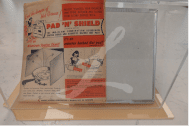
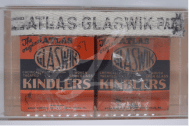
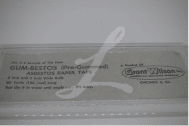
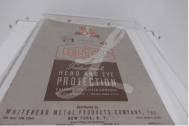
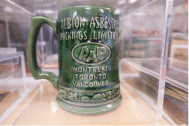
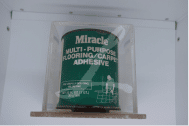
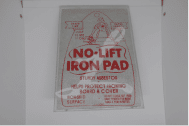
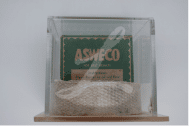
Examples Of Asbestos Products From The Lanier Law Firm
Asbestiform Minerals
The six primary types of asbestos are the most widely known and used. However, they are not the only asbestiforms that exist. According to the U.S. Department of Health and Human Services, the following silicate amphibole minerals are asbestiforms that are less regulated because they are not commercially used:
- Richterite
- Winchite
- Erionite
- Fluoro-edenite
Some forms of talc
The Agency for Toxic Substances and Disease Registry (ATSDR) acknowledges that non-commercially available durable, fibrous silicate minerals can cause health effects similar to commercial asbestos.
Types of Asbestos Used by the Military
From the 1880s to the 1950s, amosite and chrysotile fibers were used extensively as insulating materials on naval ships, with crocidolite to a lesser extent, according to an article published in Inhalation Toxicology.
Beginning in the 1930s, the U.S. Navy used asbestos in multiple applications, and amosite became the primary type.
Asbestos was used in molded insulation on all naval vessels, which endangered and exposed workers in shipyards as well as personnel aboard the ships. In 1941, Dr. Ernest Brown, a Navy Medical Corps captain, wrote in a military publication that industrial hygiene was a significant concern in the Navy. He acknowledged the potential for diseases related to asbestos dust.
Asbestos was used in the following applications:
- Insulating covers for flanges
- Valves
- High-temperature steam turbines
- Insulation for boilers, water heaters, and pipes
- Electrical wiring and equipment insulation
- Deck flooring
- Bulkheads
- Wall paint
- Ceilings
- Gaskets
- Sealants and adhesives
- Protective clothing and gloves
- Bedding
Other officials voiced similar concerns and recommended protection measures, such as wetting the asbestos and wearing masks during use, but wetting procedures were not followed due to the inability of the amosite insulation to be properly applied while wet.
During WWII, civilian asbestos use was largely restricted so that the existing supply could be reserved for the military.
By 1968, a Navy memorandum referenced a Washington Post article and SHIPS memorandum that emphasized that the greatest health risks occurred during “rip-out … especially on ships built during and shortly after World War II.”
The memo asserted that asbestos in packing and gaskets was not friable and therefore did not pose a significant health hazard.
In 1969, the Navy acknowledged the significant health hazards associated with asbestos exposure but, due to concerns that substitute materials would have inferior performance, continued to use amosite asbestos in hundreds of materials well into the 1970s and 1980s.
The Navy did not discontinue its use of asbestos until 1985.
If you are a veteran diagnosed with an asbestos-related illness, our highly-dedicated mesothelioma lawyers can help you. Contact us today for a free consultation.
Which Types of Asbestos Are the Most Dangerous?
All forms of asbestos have been proven to cause fatal conditions, including mesothelioma, lung cancer, asbestosis, and other cancers. There is no known safe level of any form of asbestos. Clinical research published in Conn’s Current Therapy 2021, however, suggests that crocidolite and amosite may be 100 times more likely than chrysotile to cause mesothelioma.
Where Does Asbestos Come From?
Asbestos is a naturally-occurring substance that forms in various locations in the Earth’s crust.
The majority of the world’s asbestos comes from Russia, but the substance is also mined in the following countries, according to Statista:
- Kazakhstan
- Cina
- Brazil
Zimbabwe
The last mine in the United States was a chrysotile mine in California. This mine closed in 2002, according to the U.S. Geological Survey.
The first large-scale asbestos mine in the United States was an anthophyllite mine in 1894 at the Sall Mountain area of Georgia. Anthophyllite asbestos was also mined at various times in North Carolina, Virginia, Maryland, Connecticut, and Massachusetts.
Asbestos in the Environment
Asbestos is usually found in mines, but in a few locations, it is close enough to the surface of the earth to find its way into the environment. When this occurs, human activities and natural erosion can release the fibers into the air. These processes can also allow asbestos to contaminate the water supply.
The following areas in the United States contain significant amounts of asbestos near the surface, where the fibers could jeopardize human health.
- California
- Humboldt County
- San Benito County
- Monterey County
- Western El Dorado County
- Virginia
- Northern Virginia, specifically in Fairfax
- Northern Blue Ridge Mountains
- Central Virginia
- South Central and Southwestern Virginia
- Washington
Talc Mines
Talc is a silicate mineral that is mined from the ground and used in a variety of commercial products, including baby powder, adult body powder, and cosmetics. Talc and asbestos are often found in the same metamorphic rock foundations, which can lead to asbestos-contaminated talc deposits.
Testing has revealed anthophyllite, tremolite, and chrysotile asbestos contamination in samples of talc.
Asbestos-tainted talc products have led to thousands of people developing mesothelioma and ovarian cancer. In July 2018, The Lanier Law Firm represented 22 women in the first case linking baby powder to ovarian cancer. The judge agreed that the asbestos in the baby powder caused ovarian cancer and awarded our clients $4.69 billion, a verdict that was later upheld but reduced to $2.1 billion.
Vermiculite
Vermiculite is a naturally occurring non-asbestiform mineral with shiny, mica-like properties. When heated, it “pops” and forms a lightweight, fire-resistant material used widely in building insulation and soil amendments.
Historical data from the Lincoln County Asbestos Resource Program, which was established to reduce exposure to Libby amphibole asbestos in Lincoln County, state that the Zonolite Company started mining vermiculite near the town of Libby, Montana, during the 1920s.
The mine was so large that, at its peak, it may have produced as much as 80 percent of the vermiculite used worldwide.
Unfortunately, the mine was contaminated with actinolite and tremolite asbestos. After this became known, it was often referred to as Libby amphibole asbestos, or LA.
The contaminated vermiculite was used locally to pave driveways, boat ramps, the local ice rink, baseball fields, and schoolyards. Children played in piles of it, and it was used in attic insulation throughout the country. The contaminated vermiculite was also processed at 245 sites throughout the country and distributed throughout the United States until approximately 1990, according to the ATSDR.
In response to the resulting health crisis in Libby, the U.S. Environmental Protection Agency initiated an asbestos removal program in Libby in 1999. Significant levels of asbestos were found in the outdoor air.
In October 2002, the EPA placed Libby on its Superfund National Priorities List. In 2009 the agency declared a public health emergency in Libby. This was the first time in history that the EPA had declared a public health emergency.
The EPA has since cleaned up more than 2,600 properties, investigated more than 7,600 properties, and removed more than one million cubic yards of contaminated soil.